
Master Bold Coffee Taste for Rich Everyday Brews at Home
Updated on: 2025-12-18
Crave a cup that’s rich, full, and satisfying from the first sip to the last? This guide shows you how to choose the right beans, dial in your grind, and brew a cup with serious depth. Discover practical steps, common pitfalls to avoid, and product picks that make your routine easier. You’ll get clear answers to key questions and an easy checklist so you can brew confidently at home. Ready for café-quality results without guesswork? Let’s go.
Table of Contents
- Introduction
- Buyer’s Checklist for a bold coffee taste
- Step-by-Step Guide
- FAQ
- Closing Thoughts & CTA
- About the Author
If you’re chasing a bold coffee taste at home, you need the right beans, a consistent grind, and a simple, repeatable brew method. This article breaks down exactly how to shop, set up, and brew for a cup with big body, rich aromatics, and a clean finish. You’ll learn how to pick roast levels, choose gear that actually matters, and fine-tune your ratio so your mug hits that sweet spot of strength and smoothness—without bitterness. For a quick starting point, explore curated options in Shop coffee and follow the guide below.
Buyer’s Checklist for a bold coffee taste
- Choose roast depth with intention: Darker roasts offer a heavier body and smoky edge, while medium roasts can deliver a powerful cup with layered sweetness. If you prefer a punchy, chocolate-forward profile, start with classic dark styles like Italian Roast.
- Pick processing and origin for body: Natural or honey-processed coffees often provide bigger mouthfeel and fruit-toned depth. Regions like Sumatra, Indonesia, and select African origins can offer earthy, syrupy textures that feel substantial.
- Prioritize freshness: Look for recently roasted beans and buy in sizes you’ll finish within a few weeks. Oxygen, heat, and light are flavor enemies; use airtight storage to retain aromatics and structure.
- Buy whole bean when possible: Ground coffee stales fast. Whole beans preserve volatile compounds that drive intensity. Grind just before brewing for maximum impact.
- Invest in a burr grinder: Uniform particle size reduces bitterness and under-extraction. A simple conical burr model outperforms most blade grinders and pays for itself in consistency.
- Match the brew method to your goal: French press or metal-filter brewers allow more oils and fine particles into the cup for a thicker texture. Pour-over with a paper filter yields clarity with strong, defined layers when dialed in.
- Dial in your ratio: A stronger cup often starts around 1:14 to 1:15 (coffee to water by weight). Adjust a gram at a time until the flavor feels deep but balanced, then log your recipe for repeatability.
- Mind water quality: Use filtered water with moderate mineral content. Water that is too soft can taste flat; overly hard water can mute sweetness and complexity.
- Set your temperature: Brewing in the 195–205°F range helps extract richness without pulling harshness. If your kettle lacks a thermometer, bring water to a boil and let it rest briefly before pouring.
- Sample before you commit: If you’re still exploring, try a curated set like a Single-Origin assortment to learn which flavor families deliver your ideal profile. A great place to start is the Single-Origin Sample Pack.
- Keep a simple log: Note your roast, ratio, grind setting, and time. Small tweaks stack up to a cup that’s richer, rounder, and more satisfying.
- Real-world result: “I always wanted a strong, smooth cup. Switching to whole bean, grinding fresh, and using Italian Roast changed everything—finally getting the depth I love.”
Step-by-Step Guide
- Choose your beans: Select a darker or robust medium roast known for a heavy body. If you enjoy smoky chocolate and toasted caramel, consider French Roast for a deep, satisfying profile.
- Weigh your dose: Start with a 1:15 ratio (for example, 20 g coffee to 300 g water). Measuring by weight keeps strength consistent across brew days.
- Grind fresh and a bit finer: For pour-over, aim for a medium-fine grind; for French press, medium-coarse. If your cup tastes thin, tighten the grind slightly. If it’s harsh, loosen it a notch.
- Heat and prep water: Use filtered water near 200°F. Preheat your brewer and mug to maintain stable temperature and fuller extraction.
- Bloom to unlock aromatics: Saturate the grounds with 2–3x their weight in water. Wait briefly for the coffee to expand, releasing trapped gases that can otherwise block even extraction.
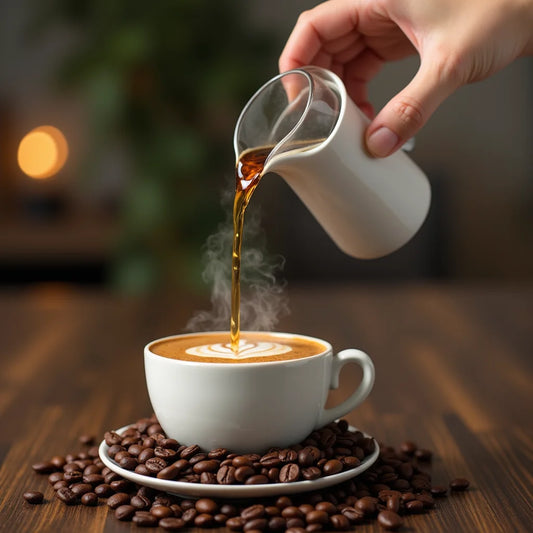
- Pour with control: For pour-over, add water in slow, steady pulses, keeping the bed level to avoid channeling. For French press, pour evenly and stir gently to submerge all grounds.
- Time your brew: Most pour-overs land around 2.5–3.5 minutes; French press often sits 3.5–4.5 minutes before plunging. Use these as starting points, then adjust based on taste.
- Finish cleanly: With pour-over, let the dripper draw down completely; with press, plunge slowly and pour off the coffee right away to avoid over-extraction.
- Taste and calibrate: If the cup is strong but bitter, coarsen the grind or reduce contact time. If it’s smooth but weak, use a finer grind or add 1–2 grams of coffee.
- Lock your recipe: When you hit that full-bodied sweet spot, record the roast, ratio, grind number, and total brew time so you can repeat it effortlessly.
FAQ
What grind size delivers a stronger, fuller cup?
A slightly finer grind increases surface area and helps extract more soluble compounds, which boosts body and perceived strength. However, going too fine can lead to bitterness or silty texture, especially with immersion brewers. For pour-over, start near medium-fine and make small adjustments until your cup feels rich yet balanced. For French press, begin at medium-coarse and move finer in tiny steps if the coffee tastes thin. Always change one variable at a time and taste the result.
Is dark roast the only way to get a robust flavor?
No. Dark roasts offer a smoky, heavy profile many people love, but a well-developed medium roast can be just as satisfying with deeper sweetness and layered complexity. Consider coffees that are naturally full-bodied, such as select Indonesian or African lots, and look for processing methods like natural or honey, which often bring thicker texture. If you prefer a bold, classic profile, Italian Roast is a reliable pick. If you want intensity with nuance, test a few origins using a curated set like the Single-Origin Sample Pack.
How does water quality and temperature affect strength?
Water acts as your extraction engine. Filtered water with moderate minerals helps carry flavor compounds into your cup, while water that’s too pure can taste flat and water that’s too hard can dull sweetness. Temperature matters too: water near 200°F extracts richness efficiently without pushing harsh notes. If your brew tastes sharp, lower the temperature slightly or coarsen the grind. If it’s bland, raise the temperature a bit or tighten the grind for more extraction.
Closing Thoughts & CTA
A great cup is not an accident. It’s the result of fresh, well-chosen beans, a consistent grind, smart water control, and a simple, repeatable recipe. Follow the checklist and steps above and you’ll move from guesswork to reliable excellence—day after day. If you want a bold coffee taste without the learning curve, start with time-tested roasts and curated sets. Explore Shop coffee, try a classic like French Roast, or sample origins with the Single-Origin Sample Pack. Your strongest, smoothest cup is a brew away.
About the Author
T10 T10 is a coffee-focused writer and product strategist who helps home brewers choose better beans and brew smarter. With a background in flavor profiling and ecommerce, T10 T10 translates coffee science into simple steps. Thanks for reading—enjoy your next cup!
Tags:
Previous
Ethical Coffee Sourcing A Practical Guide for Shops
Next
Craft Coffee Pods A Practical Guide for Consistent Home Brew